
Our patented technology behind the next generation of solar farms
VajaTrack – the vertical solar tracker transforming solar farm profitability
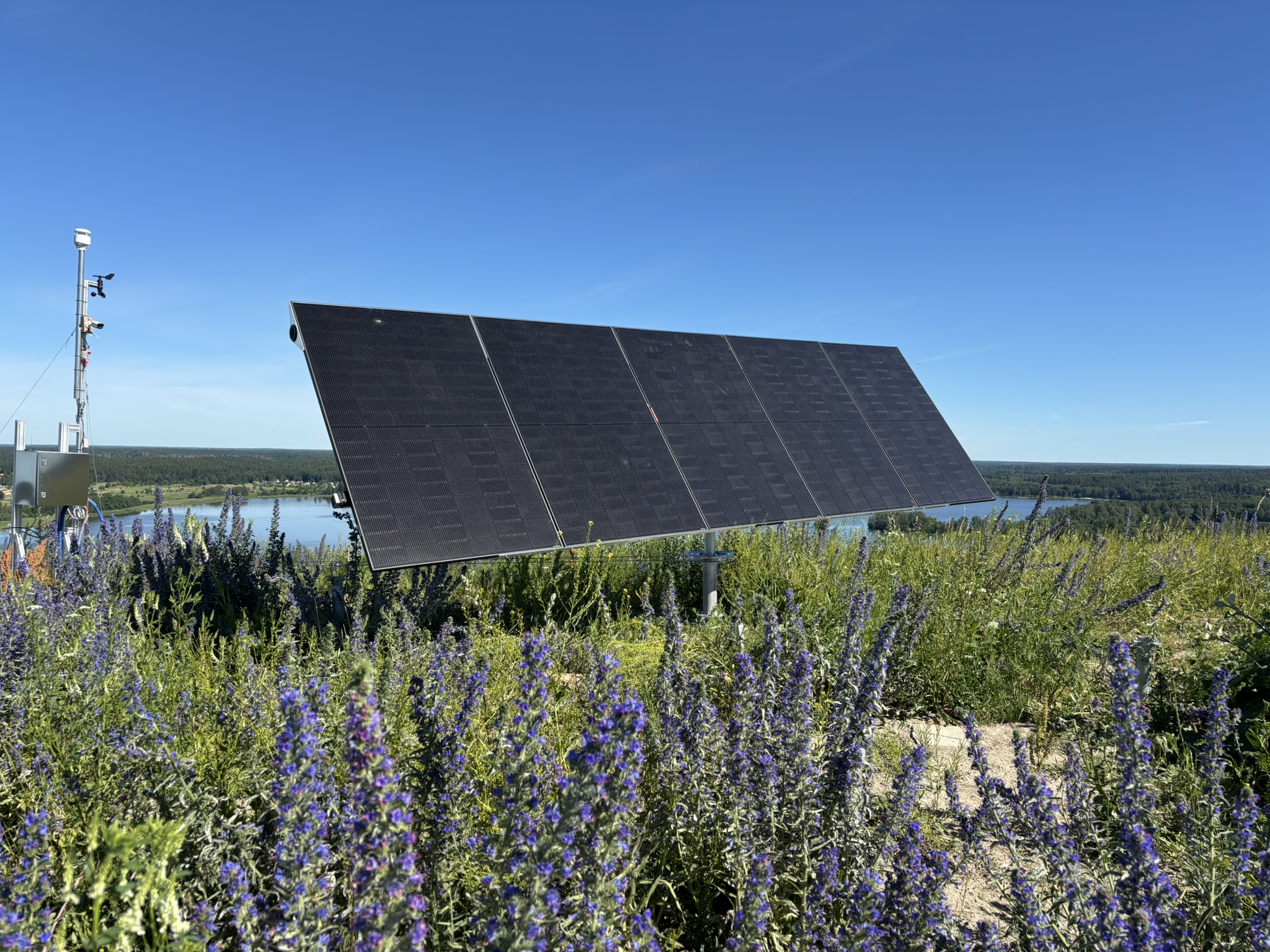
Vertical solar trackers have long held great potential but have been limited by high costs and sensitivity to strong winds. With VajaTrack, we have solved both problems. Through patented wind-responsive technology, VajaTrack delivers higher energy production, lower structural loads, and a robust solution developed for Nordic conditions.
Patented innovation
Developed to produce more valuable solar electricity
VajaTrack is the result of several years of development with a clear goal – to produce more valuable solar electricity.
By combining smart mechanics, robust design, and optimized algorithms, we have developed a solar tracker system that delivers higher energy production and better profitability than traditional ground-mounted solar installations.
25-35%
more electricity production than fixed, ground-based
solar panels (across Europe)
30-50 %
higher revenue than a system with south-facing panels
The next Generation
Developed for the solar farms of the future
Smart innovations for performance
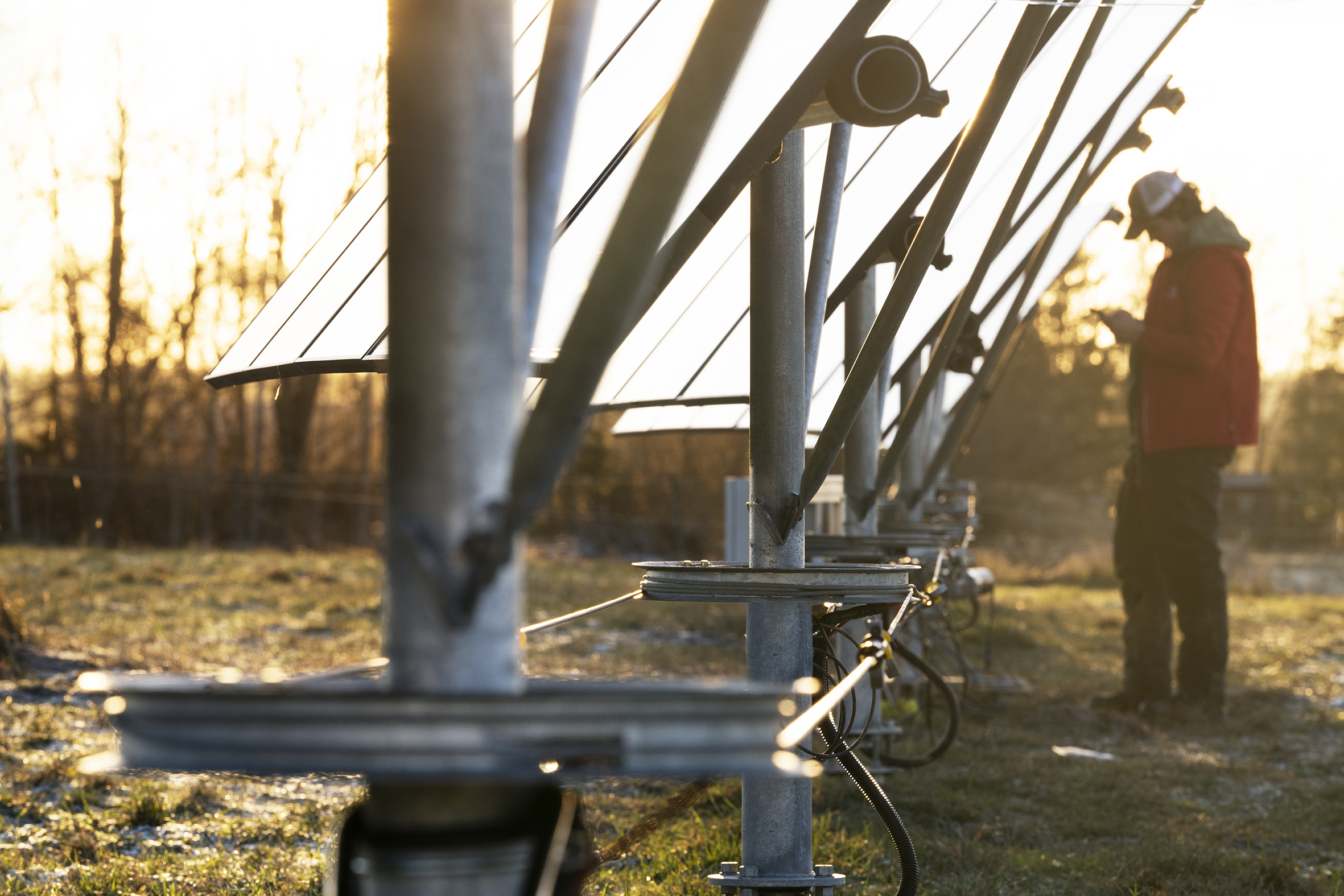
Our vertical solar tracker, VajaTrack, is based on four central innovations that together make this performance possible and highly efficient.
1
Unique feathering mechanics
2
Minimal torque design
3
Centralized drive system
4
Shade avoidance optimization
Unique feathering mechanics
Panels protect themselves against the wind
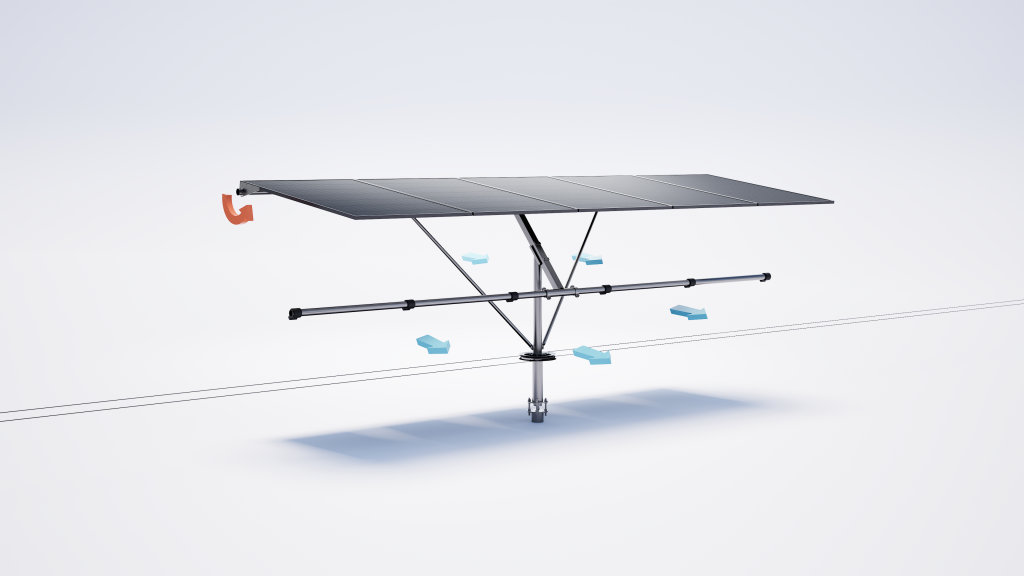
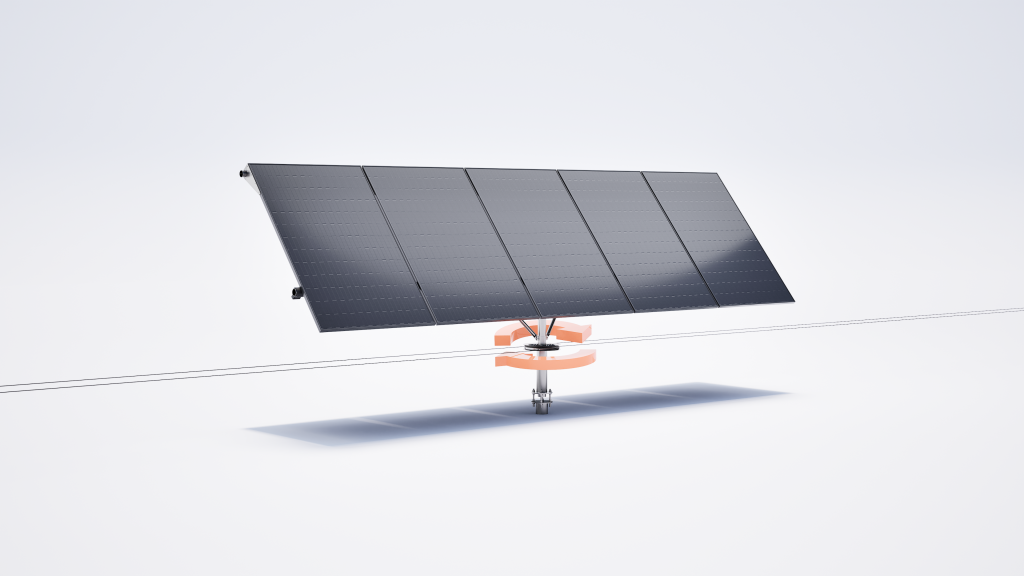
At the core of Vaja’s solar tracker system is feathering mechanics – a mechanism that allows the solar panels to feather passively. During strong winds, the panels automatically, smoothly, and quickly lift to a nearly horizontal position. This occurs without motors – the panels are lifted solely by the force of the wind, thanks to a design that carefully utilizes aerodynamic principles.
Because the panels naturally move to their stable position during high winds, the wind load is reduced by more than 85% compared to a fixed panel in a traditional vertical solar tracker, and by 80% compared to a panel locked at a 30-degree tilt (common for fixed mounting systems and for horizontal solar trackers in “stow mode”).
Vaja’s feathering principle resembles how leaves on trees and bushes in nature have evolved to survive strong winds: by swaying flexibly instead of resisting with brute strength – the exact opposite of how traditional solar mounting structures and solar trackers function.
Minimal torque design
Lower load ensures longer lifespan
Vertical solar tracker systems rotate around their vertical axis to follow the sun and thereby maximize electricity production. In Vaja’s design, this rotation is also used to achieve an architecture with minimal torque design that works in conjunction with the feathering mechanics to protect the structure.
On rare occasions with very strong winds, the units rotate around their vertical axis to optimize their orientation toward the wind instead of toward the sun. This minimizes torque, which further reduces structural loads, reduces stress and wear on the drivetrain and motor, and helps prevent situations where the wind might otherwise cause harmful resonance.
Altogether, the minimal torque design contributes to a long lifespan with minimal maintenance, as well as durability even in extreme weather.
Centralized drive system
Fewer motors result in lower costs
Traditional vertical solar trackers use one motor per tracker unit, which significantly increases both cost and complexity.
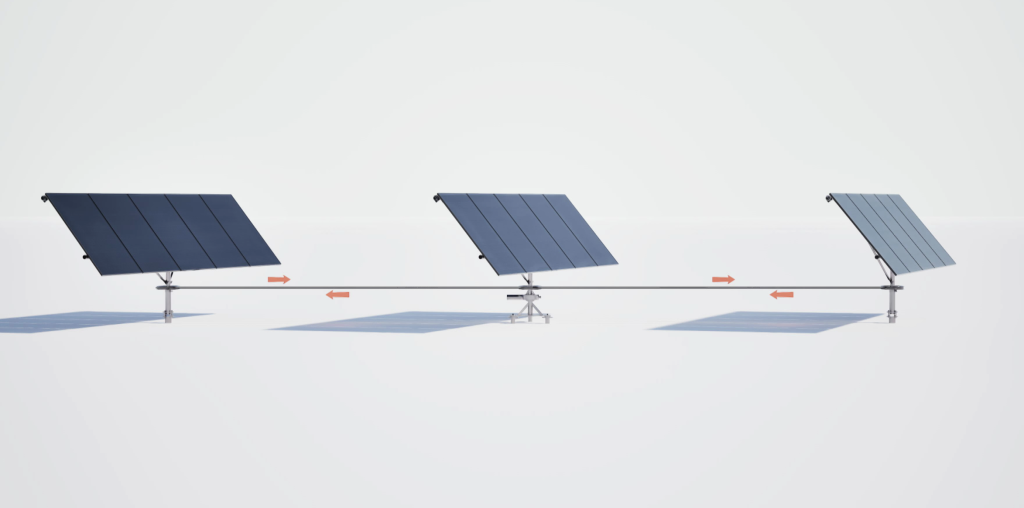
Vaja’s passive feathering mechanics and minimal torque allow the rotation of many tracker units to be driven by a cable-based centralized drive system.
With a single motor, one gearbox, and one control module driving many tracker units, both investment costs and ongoing maintenance are significantly reduced.
Share avoidance optimization
Maximizes production from every panel
Vaja’s vertical solar tracker system employs several strategies to significantly reduce shading between units within the solar park – including optimized hardware design, carefully planned solar park layouts, and backtracking algorithms specifically adapted for vertical solar tracking.
The result is minimal shading losses, ensuring that the inherently higher energy production of vertical solar trackers at latitudes beyond the 30° latitude is actually achieved in practice.
Superior technology
Vertical solar tracking is superior for half the planet
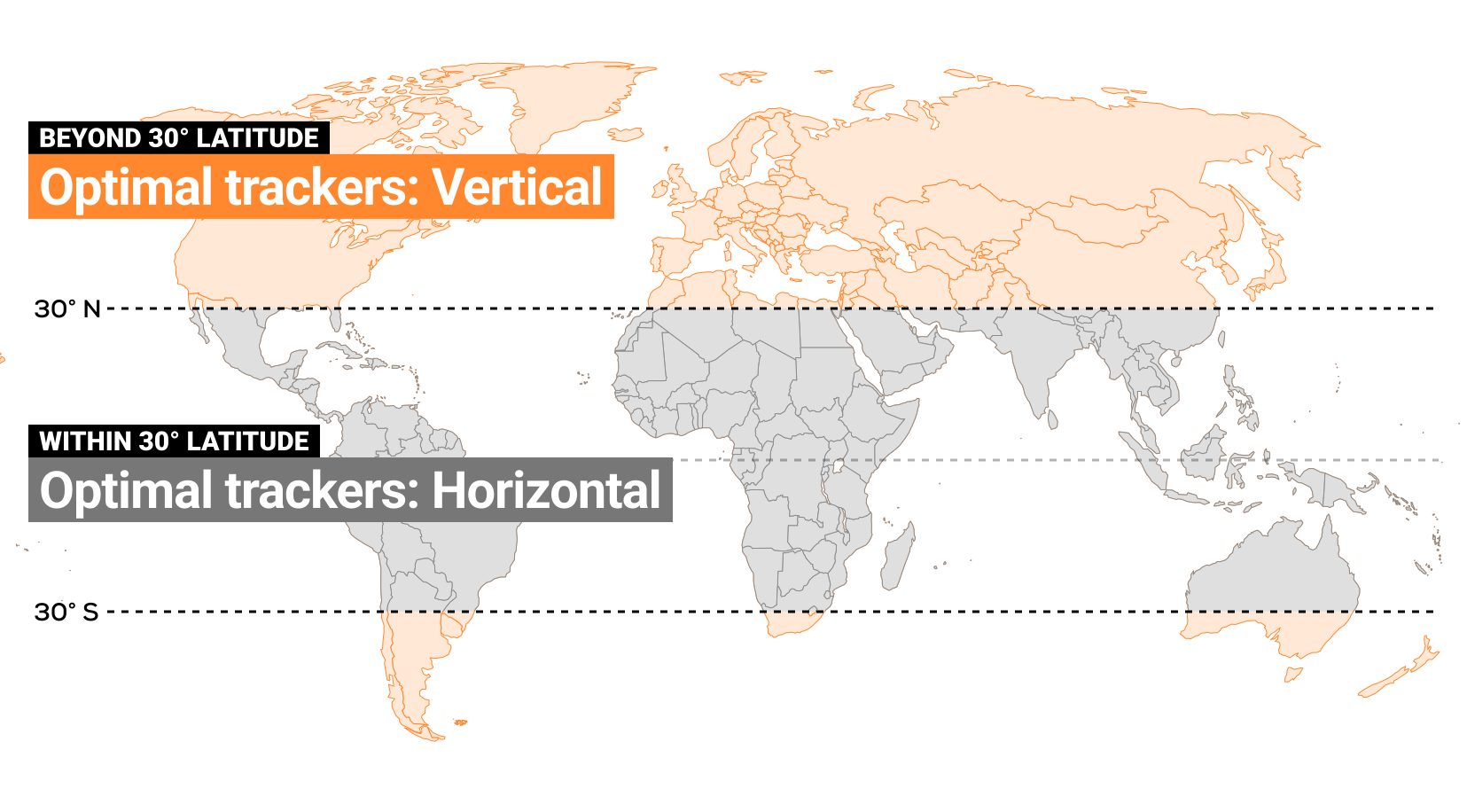
Solar trackers significantly increase electricity production from ground-based solar energy. Over the past decade, horizontal solar trackers have become the de facto standard for new solar parks built at latitudes relatively close to the equator. However, their performance declines further from the equator as the sun moves in a lower path across the sky.
On vertical solar trackers, the panels are mounted at a steep tilt and rotate around a vertical axis. Beyond the 30° latitude, vertical solar trackers therefore produce substantially more electricity than horizontal solar trackers, especially during the critical winter half of the year.
Finally, latitudes that encompass all of Europe can now benefit fullky from the significant advantages of solar trackers.
Higher performance
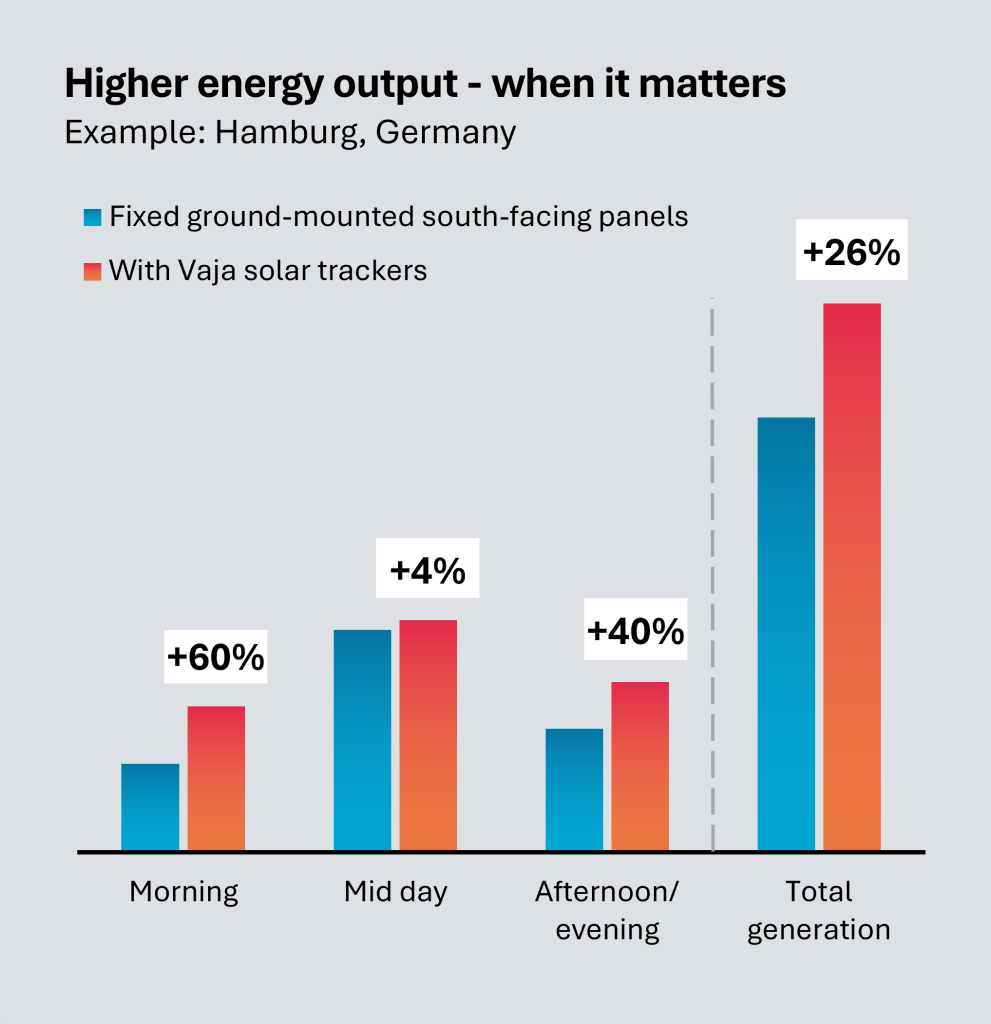
Up to 35% higher electricity production
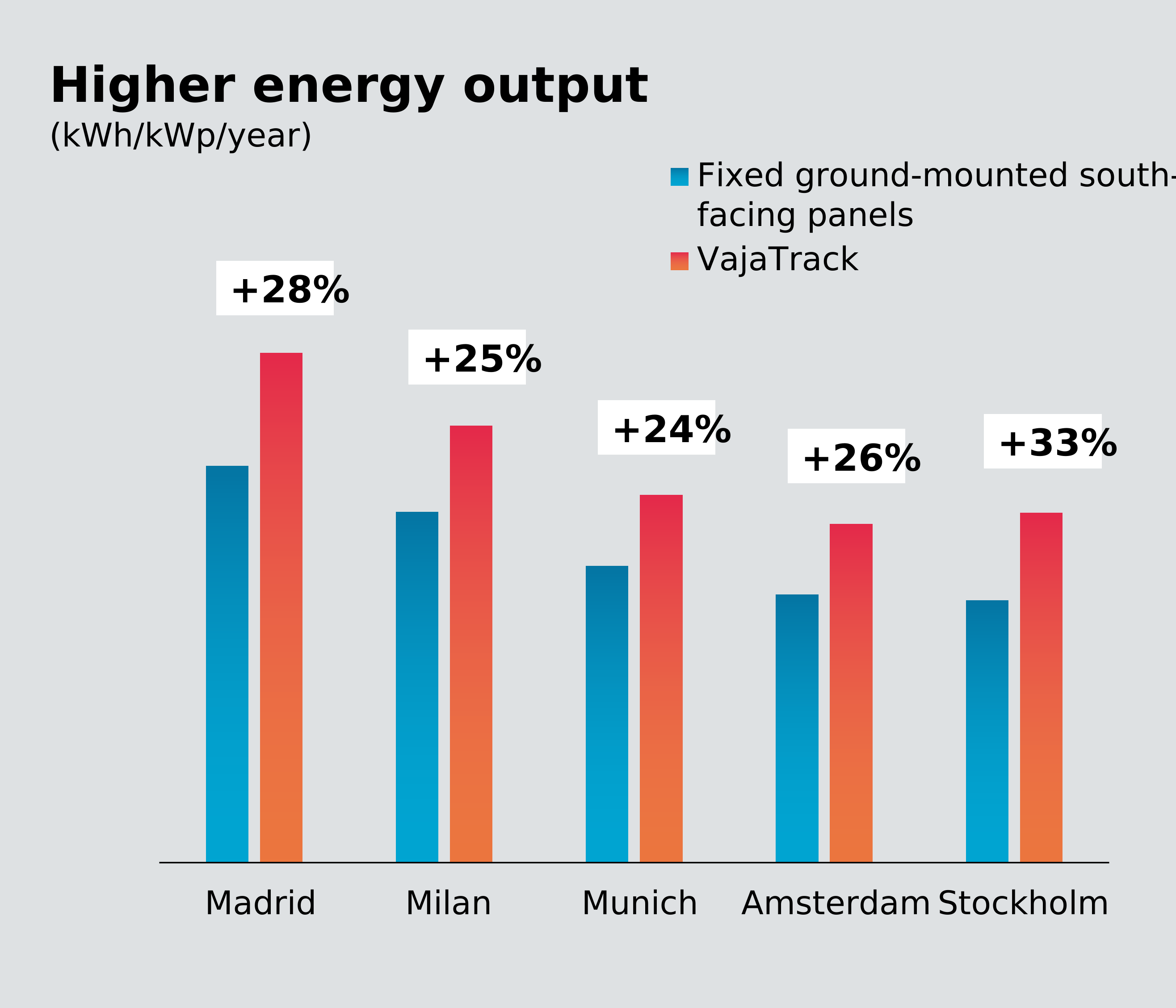
Solar farms built with VajaTrack produce significantly more electricity than those with static, south-facing panels – between +25% and +35% at locations across Europe.
High output all day
Higher value per kWh
Compared to installations with static south-facing panels, almost all extra energy with VajaTrack is produced during mornings and afternoons/evenings – exactly when the power grid needs extra capacity and when electricity prices are significantly higher.
Therefore, a solar farm with VajaTrack not only produces significantly more kilowatt-hours – it also reduces the need for battery storage and achieves a higher price per kWh than conventional solutions. Altogether, a solar farm built with VajaTrack delivers 30–50% higher revenue than a system with fixed south-facing panels.
Compared to horizontal solar trackers, solar farms with VajaTrack generate a large portion of their extra energy precisely during the cold winter months when the sun sits lower on the sky – again in line with periods when the grid’s needs and prices are at their highest.
Robust and reliable
Thoroughly tested in Nordic climates
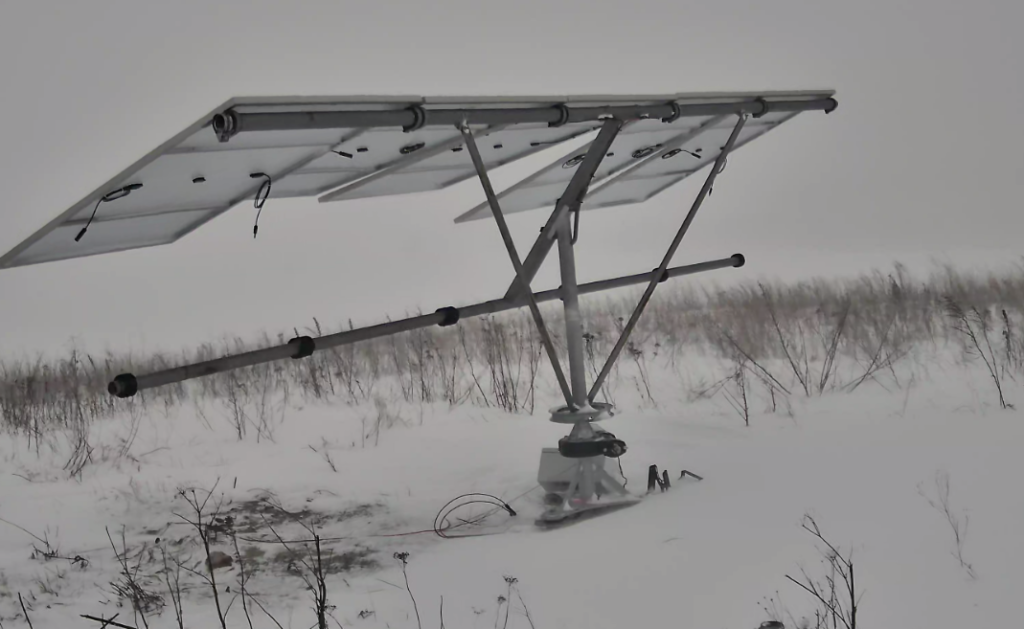
VajaTrack has been rigorously tested in Sweden’s tough Nordic climate.
The system operates reliably in severe cold, and snow naturally slides off the panels.
Most importantly, the system is designed and validated to withstand hurricane-force winds.
FAQ
Frequently asked questions about our solar tracking technology
Solar tracking systems rotate solar panels to follow the sun throughout the day, significantly increasing electricity production. Especially during the more valuable morning and evening hours. Solar trackers are already standard for ground-mounted solar energy built closer to the equator, but the technology used there is not effective further from the equator where the sun moves across the sky in a lower arc. VajaTrack is the world’s first truly cost-effective vertical solar tracking system, optimized for European latitudes.
Vaja’s smart vertical solar tracker system turns the solar panels to follow the sun throughout the day. This allows the system to produce 25-35% more electricity than fixed ground-mounted panels in a south-facing position for locations across Europe. And revenues are often even higher because the production increase is greatest during the more valuable morning and evening hours.
Vaja’s solar tracker system is a vertical solar tracker system and produces more electricity than horizontal solar tracker systems beyond the 30° latitude (e.g., Cairo in Egypt is located at that latitude).
Horizontal solar trackers rotate the solar panels around a horizontal axis, while vertical solar trackers have the panels mounted at a steep angle that rotates around a vertical axis. VajaTrack is a vertical solar tracker system.
This means that horizontal solar trackers are very efficient near the equator where the sun moves in a high path across the sky, while vertical solar trackers are most efficient further from the equator where the sun moves in a lower path.
The threshold where vertical solar trackers produce more electricity than horizontal ones is at the 30° latitude.
Vaja is a Swedish company, and naturally, our solution is optimized to function year after year in our tough Nordic climate with rain, snow, ice, and substantial sub-zero temperatures.
Get started with profitable solar energy
Would you like to know more about our patented technology?
Call us directly: +46 10-641 05 50 or Book a meeting with an expert